Rendering Newark-on-Trent
Render Repairs Newark-on-Trent | Cracks & Local Damage
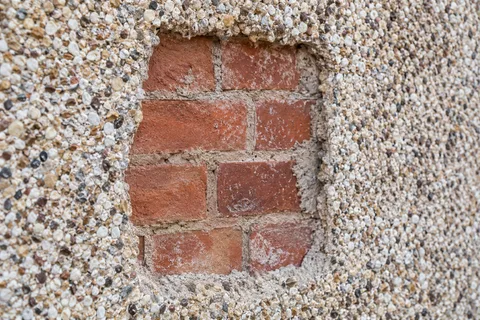
Render damage does not always call for stripping an entire elevation. A well-defined local repair may be appropriate, while recurring or widespread defects may need a broader investigation. Render repairs in Newark-on-Trent should explain the reason for the proposed extent and the material used. The aim is to retain suitable sound work where possible and avoid concealing an unresolved problem beneath a cosmetically tidy patch.

On this page
Describe the defect and its history first
The position of damage matters. A crack at an altered opening, a loose patch below a coping and a stain beside a rainwater pipe may point to different investigations. Record the visible condition, earlier repairs and any known change over time. Photographs are most useful when a close-up is paired with a view showing the surrounding wall and nearby features.
Do not turn that record into an unsupported diagnosis. A crack photograph does not establish the condition of the masonry behind it, and a dark mark does not identify a particular moisture defect on its own. The inspecting person should explain what can be established and whether further professional assessment or monitoring is appropriate. A repair should follow that conclusion rather than begin with a preferred filler or coating.
Where the defect seems connected to water from above, the rainwater coordination guide helps organise the related work. Fixing the wall surface and fixing the source may involve different trades. Both need a place in the scope if the repair is to address the established problem rather than merely reset the appearance until the next period of wet weather.
- Map the damage Tapping finds hollow areas; cracks and their likely cause are noted.
- Cut back Failed render is cut out to a sound edge, usually squared off.
- Fix the cause Leaking gutters, sills without drips or render below the DPC are dealt with.
- Rebuild in coats Using a material compatible with the surrounding render and masonry.
- Blend the finish Texture is matched; colour may need a coating over the wider area.
The usual order of work. The survey and the chosen products decide the actual steps.
Find a sound boundary without removing more than needed
The visible damaged area may not show the full extent of detached material. Appropriate inspection and careful opening-up can help establish the repair boundary. The method should avoid leaving weak adjacent material supporting the new patch, while also avoiding unnecessary destruction of sound areas. Record additional findings if the scope expands beyond the original estimate.
On traditional buildings, retained render may have value beyond its appearance. Its materials and relationship with the masonry should be considered before assuming complete replacement is preferable. Lime-render repairs require a compatible approach where that construction is present. The fact that a modern patch is available quickly does not make it suitable for a softer surrounding wall.
The coating-removal article is relevant where a hard covering needs investigation. Removal can cause damage, so the technique and extent should follow evidence from the wall. A contractor should be able to distinguish material that must be removed from areas retained for good reasons. A general phrase such as make good does not provide that explanation on a complex repair.
Separate technical repair from visual matching
A patch may restore a suitable local finish yet remain apparent because the surrounding surface has aged. Texture, colour and application marks all influence the result. An exact match should not be promised where the original material is unknown or weathered. A trial gives the owner a more realistic basis for accepting the appearance or considering a larger defined finish panel.
The article on matching texture without an invisible promise explores those choices. The technical repair area and any optional wider decorative treatment should be identified separately. That avoids describing every additional square metre as defective when the real reason for including it is to create a more consistent appearance.
If recolouring is proposed after repairs, check compatibility with both the repaired and retained areas. A coating may reduce colour differences while leaving changes in surface relief visible. For a complete defined elevation, the wall-rendering guide can help establish sensible boundaries. Those choices should be made before the owner expects a small patch to deliver the appearance of a wholly renewed facade.
| Decision | Evidence needed |
|---|---|
| Cause and extent | Inspection, history and appropriate investigation |
| Repair material | Compatibility with the retained system |
| Appearance scope | Trial and acceptable patch visibility |
Use a repair detail that belongs to the existing system
A layered modern system may need more than a cosmetic surface fill. The base, reinforcement and finish may each need treatment according to a suitable repair specification. Where product records are available, retain them and obtain relevant guidance. Where they are missing, identify the material and investigation required instead of assuming a general exterior repair product will suit every background.
Silicone and monocouche finishes have different characteristics, and traditional lime work raises another set of compatibility questions. The material name is useful only when connected to the actual build-up. A repair near a movement joint, opening or service penetration may also need the underlying detail corrected before the decorative surface is restored.
If repeated movement or serious structural deterioration is suspected, the appropriate professional input should precede a finish repair. This page does not diagnose structural safety remotely. The proposed scope needs to state what the repair is intended to address and what lies outside it. A broad promise of a permanent crack-free surface is not a substitute for investigating why an earlier repair failed.

Record the work so its performance can be reviewed
Keep photographs of the opened area, the prepared background and the completed repair, labelled by location and date. Retain the material references and any relevant inspection findings. If a symptom returns, those records help distinguish a repeat of the same issue from a new event nearby. They also provide useful information when windows, pipes or other adjacent components are altered later.
The quotation should include access, protection and reinstatement, even where the repair itself is modest. A patch above a lower roof or beside a busy entrance can require more coordination than its area suggests. Our cost guide helps identify those allowances. If the premises remain in use, commercial rendering considers the arrangements needed around staff, customers and other trades.
The maintenance-record guide gives a practical handover format. Return to the Newark-on-Trent homepage if the survey instead points towards removal, a new finish or an insulated system. The final decision should be proportionate to the findings: a clear repair where that is sufficient, a wider investigation where it is needed, and a specification based on the actual assessment of the wall.
Common questions
Why can a technically suitable patch still show?
The surrounding finish may have aged or been coated, and its texture can be difficult to reproduce. Agree the likely appearance separately from the necessary repair. A larger decorative area may be an option, but it is additional scope.
Should a returning crack receive the same treatment again?
A recurrence deserves review of the history and underlying conditions. The earlier method may not have addressed the cause. Appropriate further assessment should establish the next step rather than automatically repeating a cosmetic fill.
See housing and planning information for Newark-on-Trent and nearby places, including the source and geography behind each figure.